1 / 6
2 / 6
3 / 6
4 / 6
5 / 6
6 / 6

Kratom in Thailand - A feel-good herb for the next online shopping promotion

 A feel-good herb for the next online shopping promotion coming 9.9, maybe?


Shoppers can now pick up any variety of kratom two days after it became Thailand’s newest decriminalized drug, as enterprising souls have brought the good news to online platforms with many listings of the “folk remedy.”


From the feeds of Facebook and Twitter to popular click-and-buys such as Shopee and Lazada, kratom products ranging from plants, seeds and leaves to a bag of “organic tea” can now be found. Some vendors sell the leaves for up to THB600 (US$18) per kilogram while the seeds sprout up to THB4,000 for 100 grams.


Kratom was formerly listed as a Class 5 narcotic before Tuesday’s legalization, eight months after lawmakers gave it the green light to a new cash crop for farmers.

Decriminalization will also help all those packed into overcrowded Thai prisons on drug convictions, tens of thousands of which are prosecuted annually. Kratom combines opioid-like properties with all the fun of a stimulant. The door was opened to consumption for medical purposes along with cannabis in early 2019.

You can grow your own, too. Since Tuesday, kratom can be legally grown by households or sold commercially. Don’t sell it to kids or pregnant women though, that’s still a crime. Want to mix it up with other substances? Also not allowed, but that’s unlikely to stop you from trying.


Kratom does fill those opioid receptors however and should be handled with care – it is addictive.

Thailand Decriminalizes Marijuana


Thailand Decriminalizes Marijuana
The government has removed cannabis from the list of prohibited narcotics in an effort to help the country's struggling economy. However, the legality around the recreation use of marijuana remains entirely murky.


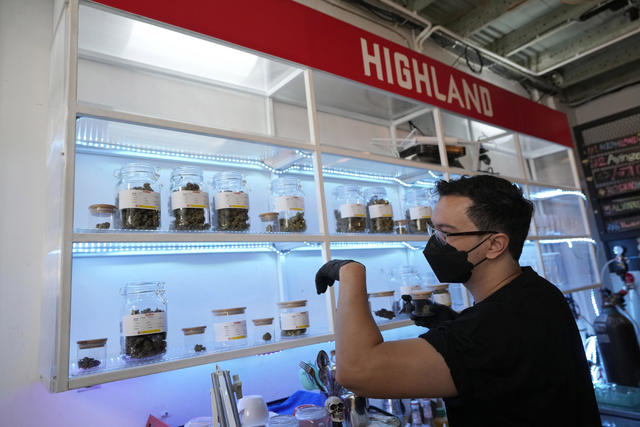
One gram of the cannabis strain UFO costs the equivalent of just over 10 euros. The price list of the "Highland Cafe" in Bangkok also promises the customer the effect of the drug: "Chill Alert".

The "Highland Cafe" in Bangkok is one of the first shops in Thailand to officially sell cannabis flowers. Others are likely to follow in the coming weeks and months.

On 9th of June, cannabis is no longer on Thailand's list of prohibited narcotics since the cabinet’s decision in December. The government aims for a special kind of economic stimulus programme - especially for tourism and agriculture.

Officials are trying to make cannabis popular as a crop: the state will now distribute one million plants to its citizens, Health Minister Anutin Charnvirakul promised on his Facebook page.

While the German government is still discussing how and in what form cannabis should be legalised as a stimulant, Thailand is becoming a marijuana pioneer. Although officially only through consumption for medical purposes is allowed, the "Highland Cafe" certainly has other target groups in mind. One thing is clear; in the restrictive Southeast Asia Region, Thailand stands out with its relaxed policy on cannabis.

Further restrictions

In the future, citizens will be allowed to grow as much cannabis and hemp as they want. All they have to do is register via the app "Plook Ganja" (roughly: plant ganja) or through a government website. Only those who want to market their harvest commercially still have to apply for a permit.

However, it remains unclear how Thailand intends to regulate consumption: Anutin and his officials affirm that cannabis shall only be used for medical purposes - and for cooking. Where exactly does the distinctive usage lies, however, is not yet clearly defined.

Extracts, for example oils, that contain more than 0.2 % of the psychoactive substance tetrahydrocannabinol (THC), is still classified as a prohibited narcotic in Thailand. By comparison, street-traded marijuana in Germany contains more than 10 percent THC on average. The cannabis-containing products now available in Thailand will therefore not cause intoxication. Products with a THC content of 0.2 percent are already available in Germany.

Thailand still has to decide, for example, whether the consumption of THC should only be allowed at home or also in cafés and restaurants. One thing seems clear: smoking the weed will probably not be allowed for the time being, at least not in public. Otherwise, the consumer can be held accountable for odour nuisance.
Cannabis expected to support medical tourism  Experts warn that the legal limbo could get consumers into trouble. "There is no mention of limits on use or drug-impaired driving laws", says Sarana Sommano, agriculture expert at Chiang Mai University. "This could be a mistake by the government in trying to rush out its policy to please voters without really planning the details and explaining to the public on what's going on."  At least regionally, the government is considering legalising recreational consumption. However, those places would still need to be specified, said Paisarn Dunkum, secretary-general of Thailand's Food and Drug Administration. Coffee shops such as those seen in the Netherlands are unlikely, however.  The government wants to prevent the use of cannabis as an intoxicant, but at the same time provide the desired economic impulses - after all, the relaxation is primarily for economic reasons. Cannabis advocates are proclaiming the plant a cash crop. At the forefront is Health Minister Anutin.  He toured Thailand's provinces for several days in March this year, promoting the cultivation and use of the long-banned plant. The highlight of the trip was Nakhon Phanom, capital of the province of the same name in north-eastern Thailand. Anutin wants to turn the provincial town into a model city - the "Cannabis City". In the future, Tourists in Nakhon Phanom will be able to learn about the plant and how it can be processed.  Thailand had already permitted the medicinal use of the plant in 2019. Then, at the end of 2020, the cannabis plant was removed from the narcotics list except for the so-called buds and flowers. Entrepreneurs quickly saw opportunities: products containing cannabis are now available in Thailand in many forms, not only as medicine but also in food.

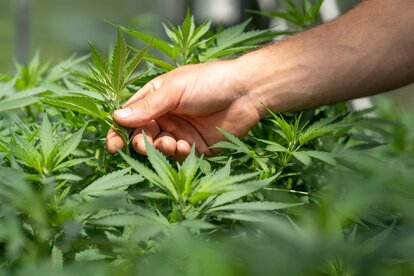
Person holding grass during daytime.© CRYSTALWEED cannabis

Cannabis expected to support medical tourism

Experts warn that the legal limbo could get consumers into trouble. "There is no mention of limits on use or drug-impaired driving laws", says Sarana Sommano, agriculture expert at Chiang Mai University. "This could be a mistake by the government in trying to rush out its policy to please voters without really planning the details and explaining to the public on what's going on."

At least regionally, the government is considering legalising recreational consumption. However, those places would still need to be specified, said Paisarn Dunkum, secretary-general of Thailand's Food and Drug Administration. Coffee shops such as those seen in the Netherlands are unlikely, however.

The government wants to prevent the use of cannabis as an intoxicant, but at the same time provide the desired economic impulses - after all, the relaxation is primarily for economic reasons. Cannabis advocates are proclaiming the plant a cash crop. At the forefront is Health Minister Anutin.

He toured Thailand's provinces for several days in March this year, promoting the cultivation and use of the long-banned plant. The highlight of the trip was Nakhon Phanom, capital of the province of the same name in north-eastern Thailand. Anutin wants to turn the provincial town into a model city - the "Cannabis City". In the future, Tourists in Nakhon Phanom will be able to learn about the plant and how it can be processed.

Thailand had already permitted the medicinal use of the plant in 2019. Then, at the end of 2020, the cannabis plant was removed from the narcotics list except for the so-called buds and flowers. Entrepreneurs quickly saw opportunities: products containing cannabis are now available in Thailand in many forms, not only as medicine but also in food.

The "Asian Cannabis Report" by the cannabis consultancy Prohibition Partners estimates that the legal cannabis market in Asia can grow to 12.5 billion USD by 2024. Cannabis could especially save Thailand's important economic sectors of agriculture and tourism.

Thailand's agricultural sector is not only struggling with labor shortages, but also with low profit margins from important jasmine rice exports. Competing cultivation countries like Vietnam have become strong rivals. Tourism is also in crisis. International visitor numbers have plummeted during the pandemic and are slow to recover. The relaxed cannabis policy is now intended to boost medical tourism in particular.

Germany plans law by spring 2023

According to Anutin, over 240,000 patients had been treated with medical cannabis by March 2022, generating nearly 200 million euros of revenue. In cannabis medicines, the THC content can also be higher than 0.2 per cent. Meanwhile, certain THC-containing medicines are even on Thailand's list for "essential medicine" and can be prescribed free of charge under public health insurance by hospitals or one of the now more than 1000 "marijuana clinics" to patients such as cancer patients.

Considering the conservative nature of Southeast Asian governments, Thailand stands out. In Singapore and Malaysia, long prison sentences are imposed for possession of small amounts of cannabis. Those who traffic in the plant and its products can even be executed. In Singapore, a man was sentenced to death as recently as 2021 for bringing a kilogram of cannabis into the country.

Germany plans to go further than Thailand in legalising cannabis use. Medical cannabis may already be prescribed by a doctor since 2017. Here, the health insurance also pays under certain conditions. The German government now plans the "controlled dispensing of cannabis to adults for consumption purposes in licensed shops", as it stipulated in the coalition agreement.

Federal Minister of Justice Marco Buschmann is sticking to the plan: The sale of legal cannabis for recreational use is to become a reality. "It is realistically possible to implement the law by spring 2023. We are trying to get it done even sooner," he tweeted in May.


Leon Wiedenhöfer is an intern in the Friedrich Naumann Foundation's Thailand project. He is studying political science at Goethe University in Frankfurt.
Cannabis expected to support medical tourism  Experts warn that the legal limbo could get consumers into trouble. "There is no mention of limits on use or drug-impaired driving laws", says Sarana Sommano, agriculture expert at Chiang Mai University. "This could be a mistake by the government in trying to rush out its policy to please voters without really planning the details and explaining to the public on what's going on."  At least regionally, the government is considering legalising recreational consumption. However, those places would still need to be specified, said Paisarn Dunkum, secretary-general of Thailand's Food and Drug Administration. Coffee shops such as those seen in the Netherlands are unlikely, however.  The government wants to prevent the use of cannabis as an intoxicant, but at the same time provide the desired economic impulses - after all, the relaxation is primarily for economic reasons. Cannabis advocates are proclaiming the plant a cash crop. At the forefront is Health Minister Anutin.  He toured Thailand's provinces for several days in March this year, promoting the cultivation and use of the long-banned plant. The highlight of the trip was Nakhon Phanom, capital of the province of the same name in north-eastern Thailand. Anutin wants to turn the provincial town into a model city - the "Cannabis City". In the future, Tourists in Nakhon Phanom will be able to learn about the plant and how it can be processed.  Thailand had already permitted the medicinal use of the plant in 2019. Then, at the end of 2020, the cannabis plant was removed from the narcotics list except for the so-called buds and flowers. Entrepreneurs quickly saw opportunities: products containing cannabis are now available in Thailand in many forms, not only as medicine but also in food.

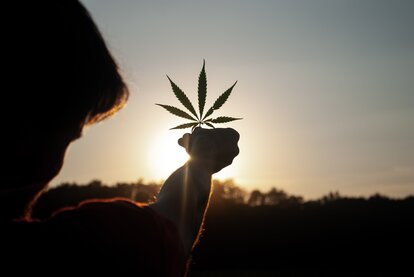
A person holding a cannabis leaf in the midst of a breathtaking sunset

Thailand’s cannabis revolution reaches Hua Hin – but rules regarding legality still hazy


Southeast Asia, a region of 11 countries and some 680 million people, has long been infamous for having the strictest anti-drug laws in the world. But in a sign that regional leaders are mulling a new approach, Thailand became the first country in Asia last week to decriminalize marijuana for medical and other purposes. Smoking weed for fun is still illegal, Thai’s health minister clarified to CNN, but he expects legal cannabis production to boost the economy. Over 3,000 inmates incarcerated in Thai prisons for marijuana-related offenses were also freed.

This, coupled with changes to Thailand’s Narcotics Code last December to include alternatives to imprisonment for drug offenders, are signs that the country is slowly abandoning its strict drug policies, says Gloria Lai, regional director of the International Drug Policy Consortium. Lai tells TIME that Thailand’s government has recognized the problem of locking up so many people, most of them poor, for low-level offenses.

Thailand has the largest prison population among ASEAN countries—some 285,000 people—and more than 80% of inmates are there on drug-related charges. There are major issues of overcrowding at Thai prisons.

The business of legalizing marijuana

Economic benefits are also propelling Thailand’s reforms. The country has a climate conducive to growing cannabis and an established medical tourism industry. Martin Jelsma, director of the Drugs & Democracy project at the Transnational Institute (TNI) in Amsterdam, says the legalization will likely end the illegal trafficking of marijuana into Thailand, particularly from Laos.

“The hope is that Thai farmers and local companies will be able to benefit from the rapidly booming international medical cannabis market, but it will be a huge challenge to compete with established Canadian, U.S., and European companies who have already captured a large part of that global market,” he says.

Read more: Here’s What Science Says About Medical Marijuana

Global sales for medical cannabis were estimated at $37.4 billion in 2021, according to market intelligence firm Prohibition Partners’ Global Cannabis Report. The report says the market could be worth over $120 billion by 2026.

Whether or not other ASEAN countries will follow suit with Thailand remains to be seen, but Lai points out the emerging debates to decriminalize marijuana and other narcotics in Myanmar and Malaysia as a positive development.
A history of Asia’s war on drugs

ASEAN governments have tried to rein in the consumption and sale of drugs since the 1970s, but mainly through extreme punitive measures—despite studies providing evidence against its effectiveness. For instance, drug offenders have been sentenced to death in Singapore, Indonesia, and Malaysia, including for the trafficking of cannabis.

In 2003, the Thai government under Prime Minister Thaksin Shinawatra declared a war on drugs that was anchored on demonizing offenders. His campaign was popular, but saw more than 2,200 dead in the first three months, according to Human Rights Watch. It also became prone to abuse, as police conducted arbitrary arrests and intimidated human rights defenders.


The Philippines’ authoritarian leader Rodrigo Duterte has waged a similar bloody campaign in his country since 2016. Official data shows that some 6,200 were killed since then, though rights groups have pegged the figure at 13,000. Children were among the victims. Duterte’s approach has become so controversial that the International Criminal Court launched an investigation last year into alleged state crimes during the anti-narcotics drive.

Like in Thailand, the police engaged in the Philippines’ war on drugs have received U.S. equipment and training. And during the height of the Philippines’ war on drugs, then-U.S. President Donald Trump told Duterte to “keep up the good work—you’re doing an amazing job.”

Yet experts say that these approaches have not been able to stop or slow the region’s drug supply, with some markets even flourishing. “There’s been so much money, so much resources, and time that have been sunk into these responses that are so heavily brutally punitive, and they have caused so much harm to people and to communities, when they could have been investing all that into something that is proven by evidence to work instead,” Lai says.

Read more: Inside Philippine President Rodrigo Duterte’s War on Drugs
What happens next?

Taking a more laissez-faire approach to drugs would not be unprecedented in Southeast Asia. Much of the region’s harsh drug policies were drawn from the colonial era, only to be tightened further from the 1970s onwards as part of an American-style war on drugs.

Given this history, Thailand’s decision to decriminalize marijuana will intensify debates on the region’s drug policy, and resistance from some narcotics hardliners in ASEAN. Singapore has long defended the “drug-free ASEAN” dream—first announced in 1998 as a goal to be reached by 2015—and has actively lobbied the U.N. against legalizing cannabis in various parts of the globe.

Yet marijuana is only one part of Southeast Asia’s drug policy. Most of Thailand’s inmates on drug-related charges are methamphetamine-related offenses, and there are few signs of a softened approach against harder drugs.

A recent U.N. report said a record-breaking 171.5 tons of methamphetamine—including over a billion in pill form—were seized in East and Southeast Asia last year. This is seven times more than seizures made 10 years ago, with around three-quarters of the seizures in the five Southeast Asian countries traversed by the Mekong River: Cambodia, Laos, Myanmar, Thailand, and Vietnam.

With this, Jelsma of the TNI believes a common Southeast Asian approach to regulating marijuana and other narcotics is unlikely to happen. But he believes that in a region “so plagued by excessively repressive drug policies, the positive influence of Thailand’s recent policy changes on the regional debate is most welcome.”

Thailand’s cannabis revolution reaches Hua Hin – but rules regarding legality still hazy


Despite the decriminalization, the authorities, including health minister Anutin Charnvirakul, have stressed that recreational use will continue to be illegal and that any use of cannabis must be for medical purposes only.  “Don’t use it and sit smiling at home and not get any work done. Those things are not our policies,” Mr Anutin told Reuters.  Officials had said the consumption of cannabis or cannabis products that contain more than 0.2% of THC without permission or without a medical prescription is illegal.  However, there is currently what police are calling a ‘vacuum period’.  It’s a grey area where next to no rules are in place with regards to cannabis.  This is because despite cannabis being decriminalized, Thailand is yet to pass new regulations under the Cannabis Act.  Until the Act is effective, the only powers police have to stop cannabis smokers are the laws regarding public nuisance.  For example, a smoker could be charged if the cannabis smoke they exhale is a nuisance to or upsets their neighbours. People have also been asked not to smoke in public places.  But until the Cannabis Act is passed, there are not any laws in place yet regarding smoking in Thailand.  With regards to growing cannabis, people have been asked to notify the authorities by registering via the Plook Ganja app. However, there is no legal requirement to do so.  As of Sunday, Thailand’s Food and Drug Administration said that 670,000 people had registered to grow cannabis, with the Plook Ganja app and website receiving 32 million hits in the first two days after its launch.


Despite the decriminalization, the authorities, including health minister Anutin Charnvirakul, have stressed that recreational use will continue to be illegal and that any use of cannabis must be for medical purposes only.

“Don’t use it and sit smiling at home and not get any work done. Those things are not our policies,” Mr Anutin told Reuters.

Officials had said the consumption of cannabis or cannabis products that contain more than 0.2% of THC without permission or without a medical prescription is illegal.

However, there is currently what police are calling a ‘vacuum period’.

It’s a grey area where next to no rules are in place with regards to cannabis.

This is because despite cannabis being decriminalized, Thailand is yet to pass new regulations under the Cannabis Act.

Until the Act is effective, the only powers police have to stop cannabis smokers are the laws regarding public nuisance.

For example, a smoker could be charged if the cannabis smoke they exhale is a nuisance to or upsets their neighbours. People have also been asked not to smoke in public places.

But until the Cannabis Act is passed, there are not any laws in place yet regarding smoking in Thailand.

With regards to growing cannabis, people have been asked to notify the authorities by registering via the Plook Ganja app. However, there is no legal requirement to do so.

As of Sunday, Thailand’s Food and Drug Administration said that 670,000 people had registered to grow cannabis, with the Plook Ganja app and website receiving 32 million hits in the first two days after its launch.

Thailand becomes 1st Asian nation to largely legalize marijuana

Thailand becomes 1st Asian nation to largely legalize marijuana

Bangkok — Thailand made it legal to cultivate and possess marijuana as of Thursday. It was like a dream come true for an aging generation of pot smokers who recall the kick delivered by the legendary Thai Stick variety.

The public health minister's plan to distribute 1 million marijuana seedlings, beginning Friday, has added to the impression that Thailand is turning into a weed wonderland.

The decision by the Food and Drug Administration to remove all of the plant from the category of narcotic drugs makes Thailand the first nation in Asia to decriminalize marijuana for medical and industrial use. But it is not following the examples of Uruguay and Canada, the only two countries so far that have legalized recreational marijuana on a national basis.A customer talks on his phone as he buys marijuana at the Highland Café in Bangkok, Thailand

So far, it appears there will be no effort to police what people can grow and smoke at home, aside from registering to do so and declaring it is for medical purposes.

Some Thai advocates celebrated on Thursday by buying marijuana at a café that had previously been limited to selling products made from the parts of the plant that do not get people high. The dozen or so people who turned up early at the Highland Café were able to choose from a variety of buds with names such as Sugarcane, Bubblegum, Purple Afghani and UFO.

"I can say it out loud, that I am a cannabis smoker. I don't need to hide like in the past when it was branded as an illegal drug," said 24-year-old Rittipong Bachkul, the day's first customer. Marijuana is also known as cannabis or ganja.

"Still risks" with unclear rules

"As far as the government is concerned, it's their job to promote medical use only. But it is pretty clear that we have come very far and finally are legalizing its use. The government understands that it's more pros than cons," said Rattapon Sanrak, the café's co-owner and a longtime legalization activist.

The country is known for its Thai Stick variety, which is named after the way its potent flowers are dried and tied into sticks. It is the origin of many strains now grown overseas.Thailand becomes 1st Asian nation to largely legalize marijuana  Bangkok — Thailand made it legal to cultivate and possess marijuana as of Thursday. It was like a dream come true for an aging generation of pot smokers who recall the kick delivered by the legendary Thai Stick variety.  The public health minister's plan to distribute 1 million marijuana seedlings, beginning Friday, has added to the impression that Thailand is turning into a weed wonderland.  The decision by the Food and Drug Administration to remove all of the plant from the category of narcotic drugs makes Thailand the first nation in Asia to decriminalize marijuana for medical and industrial use. But it is not following the examples of Uruguay and Canada, the only two countries so far that have legalized recreational marijuana on a national basis.A customer talks on his phone as he buys marijuana at the Highland Café in Bangkok, Thailand  So far, it appears there will be no effort to police what people can grow and smoke at home, aside from registering to do so and declaring it is for medical purposes.  Some Thai advocates celebrated on Thursday by buying marijuana at a café that had previously been limited to selling products made from the parts of the plant that do not get people high. The dozen or so people who turned up early at the Highland Café were able to choose from a variety of buds with names such as Sugarcane, Bubblegum, Purple Afghani and UFO.  "I can say it out loud, that I am a cannabis smoker. I don't need to hide like in the past when it was branded as an illegal drug," said 24-year-old Rittipong Bachkul, the day's first customer. Marijuana is also known as cannabis or ganja.  "Still risks" with unclear rules  "As far as the government is concerned, it's their job to promote medical use only. But it is pretty clear that we have come very far and finally are legalizing its use. The government understands that it's more pros than cons," said Rattapon Sanrak, the café's co-owner and a longtime legalization activist.  The country is known for its Thai Stick variety, which is named after the way its potent flowers are dried and tied into sticks. It is the origin of many strains now grown overseas.

A staffer at the Highland Café selects portions of marijuana for a customer in Bangkok, Thailand, June 9, 2022.SAKCHAI LALIT/AP

Thailand's government has warned that those eager to light up for fun that smoking in public could still be considered a nuisance, subject to a potential 3-month jail sentence and 25,000 baht ($780) fine. And marijuana extracts, such as oil, remain illegal if they contain more than 0.2% of tetrahydrocannabinol, or THC, the chemical that makes people high.

Tourists should proceed cautiously until the rules become clearer, said Prof. Sarana Sommano of Chiang Mai University's Department of Plant and Soil Sciences.

"There are still risks. The problem is that cannabis is no longer considered a narcotic but there are no ministry regulations and rules governing the use of it," she said. "There is no mention of limits on use, drug-impaired driving laws. This could be a mistake by the government in trying to rush out its policy to please voters without really planning the details and explaining to the public what's going on."

Thailand mainly wants to make a splash in the market for medical marijuana. It already has a well-developed medical tourism industry, and its tropical climate is ideal for growing cannabis.

"We should know how to use cannabis," Public Health Minister Anutin Charnvirakul, a marijuana booster, said recently. "If we have the right awareness, cannabis is like gold, something valuable, and should be promoted."  Get out of jail free card.  Some immediate beneficiaries of the change are people who have been locked up for breaking the old law.  "From our perspective, a major positive outcome of the legal changes is that at least 4,000 people imprisoned for offenses relating to cannabis will be released," Gloria Lai, Asia regional director of the International Drug Policy Consortium, said in an email interview.  "People facing cannabis-related charges will see them dropped, and money and cannabis seized from people charged with cannabis-related offenses will be returned to their owners," she said. Her organization is a network of civic groups worldwide advocating drug policies that incorporate human rights, health and development.  Weed windfall, or marijuana monopoly?  Predicted economic benefits are at the heart of Thailand's marijuana reforms, projected to boost everything from national income to small farmers' livelihoods. But there is concern over whether the benefits will be distributed equitably.  One fear is that large corporations could unfairly benefit from proposed regulations involving complicated licensing processes and expensive fees for commercial use that would handicap small producers.

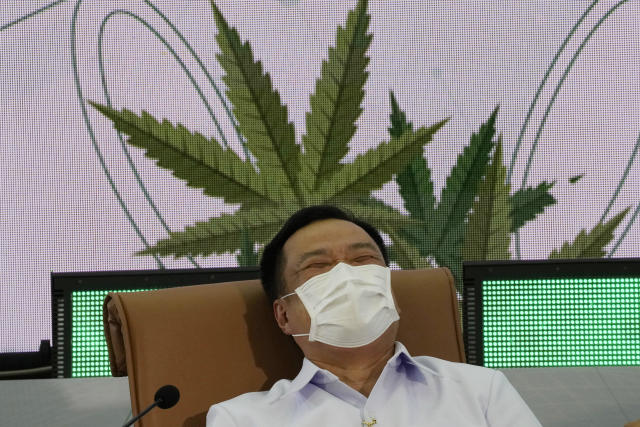
Thailand's Public Health Minister Anutin Charnvirakul reacts during news conference, February 8, 2022, at the Public Health Ministry in Nonthaburi, Thailand, after signing a measure that drops cannabis from his ministry's list of controlled drugs.SAKCHAI LALIT/AP

"We should know how to use cannabis," Public Health Minister Anutin Charnvirakul, a marijuana booster, said recently. "If we have the right awareness, cannabis is like gold, something valuable, and should be promoted."

Get out of jail free card.  Some immediate beneficiaries of the change are people who have been locked up for breaking the old law.

"From our perspective, a major positive outcome of the legal changes is that at least 4,000 people imprisoned for offenses relating to cannabis will be released," Gloria Lai, Asia regional director of the International Drug Policy Consortium, said in an email interview.

"People facing cannabis-related charges will see them dropped, and money and cannabis seized from people charged with cannabis-related offenses will be returned to their owners," she said. Her organization is a network of civic groups worldwide advocating drug policies that incorporate human rights, health and development.

Weed windfall, or marijuana monopoly?

Predicted economic benefits are at the heart of Thailand's marijuana reforms, projected to boost everything from national income to small farmers' livelihoods. But there is concern over whether the benefits will be distributed equitably.

One fear is that large corporations could unfairly benefit from proposed regulations involving complicated licensing processes and expensive fees for commercial use that would handicap small producers.
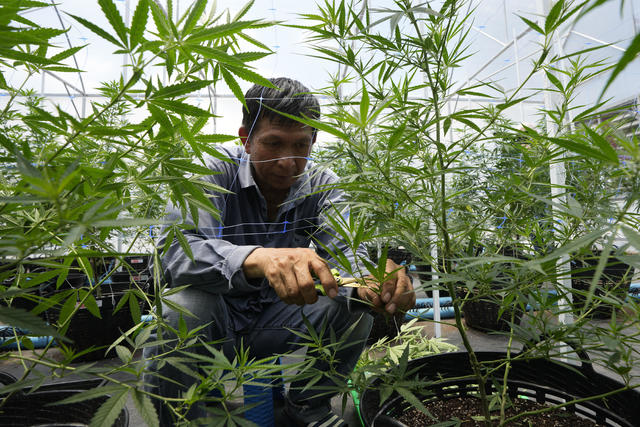
"We should know how to use cannabis," Public Health Minister Anutin Charnvirakul, a marijuana booster, said recently. "If we have the right awareness, cannabis is like gold, something valuable, and should be promoted."  Get out of jail free card.  Some immediate beneficiaries of the change are people who have been locked up for breaking the old law.  "From our perspective, a major positive outcome of the legal changes is that at least 4,000 people imprisoned for offenses relating to cannabis will be released," Gloria Lai, Asia regional director of the International Drug Policy Consortium, said in an email interview.  "People facing cannabis-related charges will see them dropped, and money and cannabis seized from people charged with cannabis-related offenses will be returned to their owners," she said. Her organization is a network of civic groups worldwide advocating drug policies that incorporate human rights, health and development.  Weed windfall, or marijuana monopoly?  Predicted economic benefits are at the heart of Thailand's marijuana reforms, projected to boost everything from national income to small farmers' livelihoods. But there is concern over whether the benefits will be distributed equitably.  One fear is that large corporations could unfairly benefit from proposed regulations involving complicated licensing processes and expensive fees for commercial use that would handicap small producers.A worker tends to cannabis plants at a farm in Chonburi province, eastern Thailand, June 5, 2022.SAKCHAI LALIT/AP

Taopiphop Limjittrakorn, a lawmaker in the opposition Move Forward party, said that under some proposed regulations, the cannabis industry could end up being controlled by a few big companies, as is the case with alcoholic beverages. His party wants the laws now being drafted to tackle the problem.

Small operators are eager to move into the marijuana business.

On a recent hot Sunday afternoon in eastern Thailand's Sri Racha district, Ittisug Hanjichan, owner of the Goldenleaf Hemp cannabis farm, led his fifth training course for 40 entrepreneurs, farmers, and retirees. They paid about $150 each to learn tips on nicking seed coats and tending the plants to get quality yields.


One of the attendees was 18-year-old Chanadech Sonboon, who said his parents used to scold him for trying to secretly grow marijuana plants.

He said his father has changed his mind and now sees marijuana as a medication rather than something to be abused. The family runs a small homestay and café and hopes to one day provide cannabis to its guests.­­­